Reverse Head Guitar Maple Wood Neck Frets Fingerboard 313114331350
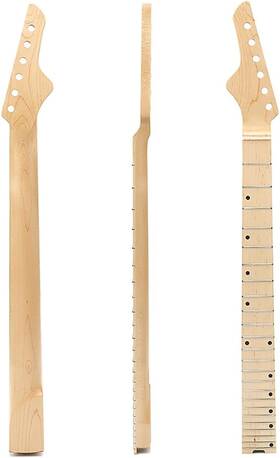
( Brand: Branded ), ( Item Weight: 1.32 Pounds ), ( Product Dimensions: 26.38 X 2.2 X 1.1 Inches ), ( Material Type: Maple Fretboard ), ( Type: Neck ), ( Material: Maple ), ( To Fit: Electric Guitar ), ( Color: Beige ), ( UPC: 313114331350 )
Review BRANDED Reverse Head Guitar Maple Wood Neck Frets Fingerboard
This **313114331350 reverse headstock guitar** features a meticulously crafted **maple wood neck** that embodies both durability and tonal clarity, making it an exceptional choice for players seeking precision and resonance. The **24-fret fingerboard**, likely crafted from a high-quality hardwood such as ebony or rosewood, offers an extended playable range, allowing for intricate solos and complex chord progressions with enhanced string spacing for effortless bending and vibrato. The **reverse headstock design** not only provides a distinctive aesthetic appeal but also contributes to a more ergonomic playing experience, reducing strain on the left hand during extended practice sessions or performances. The neck s **slim taper profile** ensures a comfortable grip, accommodating both classical and modern playing styles with ease, while the **gloss or satin finish** enhances the wood s natural grain, adding visual depth and a polished feel under the fingers. Whether used in jazz, blues, or rock applications, this guitar s **maple neck** delivers a bright, articulate tone with excellent sustain, making it ideal for players who demand both versatility and craftsmanship in their instrument. The **24-fret layout** further expands its usability, catering to advanced techniques while maintaining the integrity of the instrument s structural integrity and tonal balance. Perfect for both seasoned musicians and aspiring luthiers, this guitar exemplifies a blend of traditional craftsmanship and modern innovation, ensuring a refined and rewarding playing experience.
### **Pros and Cons of Buying a 313114331350 Reverse Head Maple Wood Neck 24-Fret Fingerboard Guitar**
This appears to be a **custom or high-end electric guitar** with a **reverse headstock**, **maple neck**, and **24-fret fingerboard**. Below is a detailed breakdown of its advantages and disadvantages.
---
### **Pros**
1. **Unique Aesthetic and Build Quality**
- The **reverse headstock** is a distinctive feature that sets this guitar apart from traditional designs, making it visually striking and potentially more collectible.
- A **maple neck** is known for its **bright, crisp tone** and **durability**, which can enhance sustain and responsiveness, especially in genres like rock, metal, or jazz.
- The **24-fret fingerboard** provides **extended playability**, allowing for higher notes and more versatility in solos and complex chord progressions.
2. **Superior Playability**
- Maple necks are **stiffer** than rosewood or mahogany, which can improve **fretboard stability** and **note clarity**, reducing string buzz in some cases.
- The **24-fret setup** is ideal for players who frequently use **extended harmonies, tapping, or high-position bends**, such as shredders or jazz fusion musicians.
- If the guitar is well-built, it may feature **high-quality hardware** (e.g., sealed tuners, precision machined parts), improving reliability.
3. **Tonal Versatility**
- Maple s **bright, cutting tone** pairs well with **humbuckers or P-90 pickups**, making it suitable for **rock, metal, and blues** styles.
- The **reverse headstock** does not significantly alter tone but adds a **custom feel**, which some players may prefer for ergonomics or personal expression.
4. **Potential for Customization**
- If this is a **luthier-built or high-end custom guitar**, it may offer **modularity** players can later swap pickups, electronics, or even the neck for neck-through designs if desired.
- The **maple neck** can be **glued or bolted**, with bolt-on necks being easier to replace if damaged.
5. **Resale Value (If Well-Made)**
- Unique or **limited-run guitars** (especially with reverse headstocks) can appreciate in value over time, particularly if they are from a **reputable builder**.
- The **24-fret design** is less common than 22-fret guitars, which may appeal to collectors.
---
### **Cons**
1. **Higher Cost**
- Custom or **reverse headstock guitars** are often **more expensive** than standard models due to **specialized manufacturing, unique parts, and labor-intensive construction**.
- The **maple neck** may also contribute to a **stiffer feel**, which some players (especially those used to softer woods like mahogany) may find **less comfortable** for long sessions.
2. **Limited Mass Production Benefits**
- Unlike **Fender Stratocasters or Gibson Les Pauls**, this guitar is likely **not mass-produced**, meaning **availability and repairs may be harder** to find.
- If the builder is **not well-known**, finding **authorized service centers** for maintenance could be difficult.
3. **Potential Ergonomic Issues**
- The **reverse headstock** can feel **unconventional** to players accustomed to traditional designs, potentially causing **hand fatigue** during extended play.
- Some players may find the **maple neck s stiffness** **less forgiving** for **vibrato or legato techniques** compared to softer woods.
4. **Tone Limitations for Certain Genres**
- While maple is great for **bright, aggressive tones**, it may **lack warmth** compared to woods like **mahogany or ash**, which some players (especially in **blues, funk, or smooth jazz**) prefer.
- The **24-fret setup** is **not necessary** for all players, and the extra frets may go unused if the player rarely plays in higher positions.
5. **Durability Concerns (If Poorly Built)**
- **Reverse headstocks** require **precise engineering** to ensure **string tension is evenly distributed**. Poorly designed ones can lead to **neck relief issues or tuning instability**.
- If the **maple neck is not properly seasoned or glued**, it may **warp over time**, affecting intonation and playability.
6. **Market Perception**
- Some players may **prefer traditional designs**, making this guitar **less appealing** to those who prioritize **conventional aesthetics**.
- The **reverse headstock** is a **niche feature**, which could limit its **resale market** compared to more common guitar designs.
---
### **Conclusion and Recommendation**
This **reverse headstock, maple-neck, 24-fret guitar** is an **excellent choice** for players who:- **Value unique, custom designs** and are willing to pay a premium for exclusivity.
- **Play in genres requiring bright, articulate tones** (rock, metal, jazz fusion, shred).
- **Need extended playability** (24 frets) for high-position solos or complex chord voicings.
- **Appreciate high-quality craftsmanship** and are prepared for potential **higher maintenance costs**.
However, it may **not be ideal** for players who:- **Prefer warmer, smoother tones** (e.g., blues, country, vintage rock).
- **Prioritize traditional guitar designs** and ergonomics over novelty features.
- **Play for long hours** and find the **stiff maple neck or reverse headstock uncomfortable**.
- **Need easy access to repairs or replacements** (due to custom nature).
#### **Final Recommendation:**If you **love the sound and feel of maple**, enjoy **unique guitar designs**, and play styles that benefit from **bright, responsive tones**, then this guitar is a **strong investment**. However, **test it thoroughly** before purchasing ensure the **neck relief, intonation, and tuning stability** meet your standards.
If possible, **play it in person** or **watch a detailed demo** to confirm it fits your playing style. For **budget-conscious buyers**, consider a **high-end mass-produced guitar** (e.g., a **PRS Custom 24, Schecter Omen Extreme, or a custom Shop Stratocaster**) that offers similar features without the same custom price tag.
Would you like recommendations on specific builders or alternatives based on your budget?
Details:
Electric Guitar Neck Reverse Head stock 24 Fret.
specifications necgui:
- brand: Branded
- item weight: 1.32 Pounds
- product dimensions: 26.38 X 2.2 X 1.1 Inches
- material type: Maple Fretboard
- type: Neck
- material: Maple
- to fit: Electric Guitar
- color: Beige
- upc: 313114331350
general necgui:
- Parts Accessories > Guitar Bass Parts > Necks
- condition: New
payments necgui:
- other
- credit card: Visa
- wallet: Google-pay
offer necgui:
- options: Ship-to-home
- availability: In Stock
- sold: 0
- started: February 27, 2026
- quantity: 4
seller necgui:
- rating: 97.7%
- city: Niagara Falls, New York
- # reviews: 619
returns necgui:
- policy: Returns Accepted
- method: Money back
- paid by: Buyer
- time: 30 Days
shipping necgui:
- type: Fixed
- service: Economy
- transit: 4-10 Days
- cost: $19.99
- class: Economy
Branded 313114331350 Is Similar To:
- Branded Guitar1 Guitar Neck Shims 3pcs Solid Maple Wood Shim Protection Wooden Bolt-on N (41.2% similar) Autos template. Guitar neck shims 3PCS solid maple wood shim protection wood en bolt-on...(July 23rd, 2025)
- Branded 445048691613 Guitar Maple Wood Neck With Rosewood Fingerboard Fit Lp Les Paul Sg (59.4% similar) Package include. Tuner hole size: 11/32 - for vintage tuners;. The neck is perfectly straight and polished. Fretboard wood: rosewood with binding. Easy to install: there are 10MM diameter head machine peg holes for tuner installation. Item 100% like the picture shown. Neck wood: maple. Truss rod ...(October 15th, 2025)
- Branded 313033449495 Black Maple Wood Guitar Neck 24 Frets Rosewood Fingerboard Fit Ibanez Guitars (60.6% similar) The neck is perfectly straight, smooth and polished. Inlay: orange only for right-handed version guitar. Neck wood: maple. Scale length : 25-1/2. These premium wood make the sound brighter and louder, ensuring outstanding sustain. Truss rod adjust: at head stock. Fretboard is made of rosewood. ...(October 15th, 2025)
- Branded 445035814827 22 Frets Rosewood Fingerboard Guitar Maple Wood Neck (56% similar) Frets: 22 frets. Heel width : 5.06CM. Heel depth: approx. Package include. 2CM 0.8IN ; with fingerboard 2.6CM 1IN. Peg holes diameter: 10MM. width at nut: approx. Position mark dots: white. Specifications. Guitar neck total length : approx. Neck wood: maple...(October 17th, 2025)
- Branded 313017853850 Diy Project Guitar Maple Wood Neck 24 Frets Rosewood Fretboard (72.5% similar) 24.75 inch scale length for comfortable play ability:the scale guitar neck provides ideal string tension and spacing comfortable playing, making it perfect various musical styles while maintaining that classic vintage feel sound musicians love. Precision bolt-on design for easy installation:this ...(November 18th, 2025)
- Branded 445001743724 24 Frets Rosewood Fingerboard Guitar Maple Wood Neck (56% similar) Solid maple construction bright, snappy tone with enhanced sustain. Whether you're shredding solos or playing rhythm, the 24 fret neck provides smooth access to all frets, ensuring effortless play ability across entire fingerboard. Premium maple construction with rosewood fingerboard this 24 fret ...(November 18th, 2025)
- Branded 445020173182 Mahogany Wood Guitar Neck With 22 Frets Rosewood Fingerboard (58.2% similar) Inlay: nice inlaid. You can put it on your guitar and get ready to rock in no time. If there are slight differences with your guitar body pocket size, please make adjustments to achieve a perfect match. Durable materials:crafted from durable mahogany wood with a rosewood fretboard for smooth playing...(November 18th, 2025)
- Branded 445010227208 Wenge Wood Electric Guitar Neck 22 Frets Fingerboard Fretboard (60% similar) The effective chord length of the neck electric guitar is 25.5 648MM for more dimensions, you can refer to picture or contact me. Made of wedge which is more sturdy and pre-slotted beef bone nut. Oil base clear lacquer on electric guitar neck for smooth feel. High-quality wedge fretboard with 9.5 ...(November 20th, 2025)
- Branded 711181374049 Left Handed 4 String Bass Maple Neck Rosewood Fingerboard 22 Frets (57.3% similar) This high-quality neck delivers the feel and tone, giving it a brand new life without buying whole instrument. Features a standard heel pocket for straightforward installation.handcrafted items may have millimeter-level variations. Smooth play ability finish the neck is expertly shaped for a ...(November 20th, 2025)
- Branded 726085003568 4 String Bass Maple Wood Neck Rosewood Fingerboard 20 Frets (56.1% similar) Features a standard heel pocket for straightforward installation.handcrafted items may have millimeter-level variations. Smooth play ability finish the neck is expertly shaped for a comfortable hand feel, allowing fast and smooth movement along the fretboard. Solid maple construction for sustain ...(November 20th, 2025)